
Outdoor Dining
Outdoor Restaurant Mitigation
Suitable for garden dining and semi-open seating areas where mosquito interference affects dwell time.
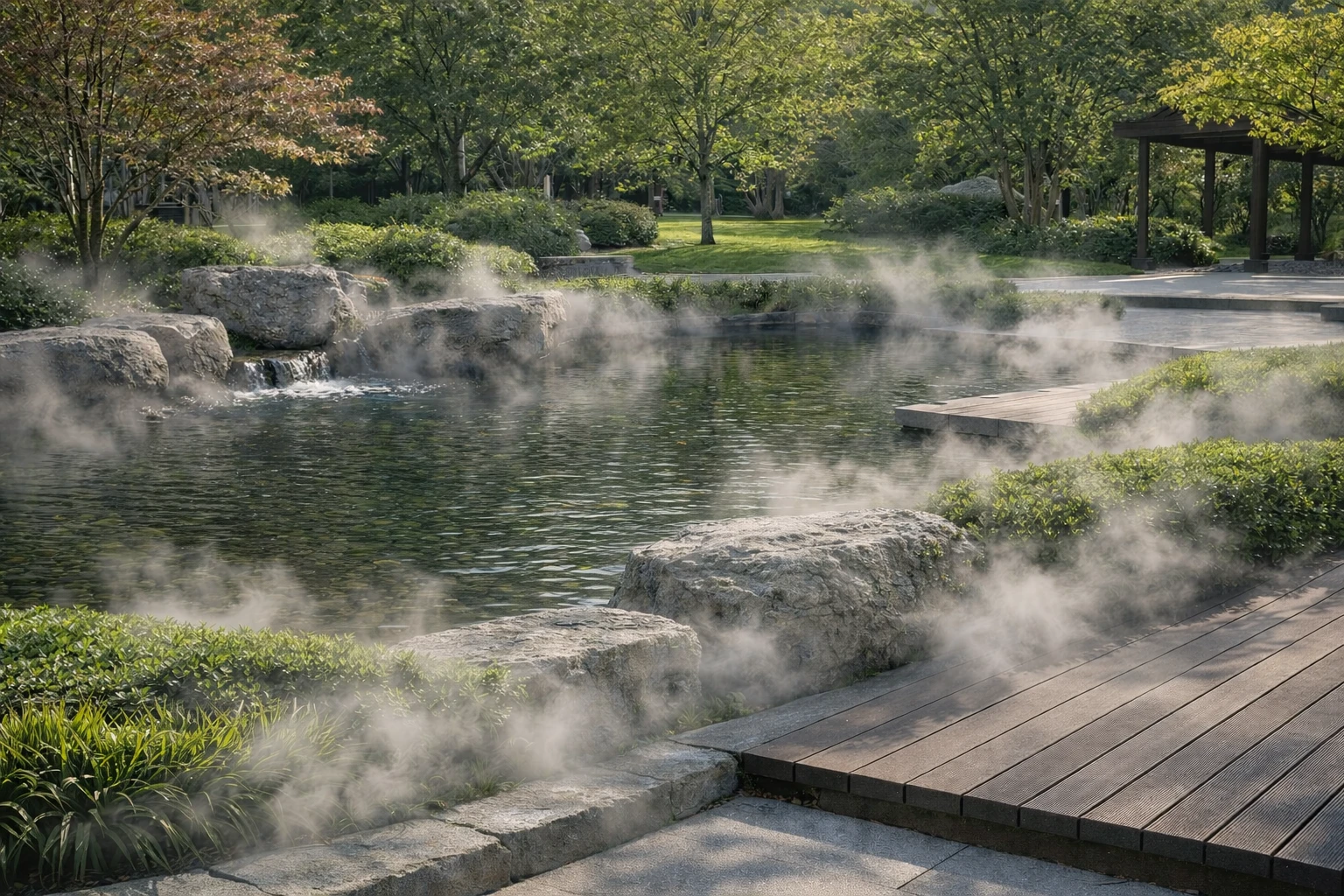
Outdoor mosquito nuisance increases around water features, shaded vegetation, and humid microclimates. We apply an “environmental interference” strategy using zoned misting and discreet integration to reduce activity while preserving landscape aesthetics and safety.
Mosquitoes favor humid, shaded, low-wind spots. Identifying “hot zones” enables targeted control.
Lights or spraying chemicals can be limited in coverage and raise safety concerns. A controllable, sustainable approach performs better for public spaces.
We use zoned misting and timing to reduce approach and lingering (site-dependent results).
Piping and equipment can be hidden in planting, low walls, or cabinets for clean visuals.
We plan filtration, inspections, and operating rules to keep performance stable and safe.
Outdoor mosquito-interference mitigation is not only about the equipment. It depends on water features, vegetation, dwell time, and movement patterns. The cards below highlight representative outdoor stay zones so visitors can quickly understand the different deployment logics. Every card can autoplay and open in a lightbox.
Suitable for garden dining and semi-open seating areas where mosquito interference affects dwell time.
Useful for mountain campgrounds, shade shelters, and other long-stay leisure areas.
Appropriate for temple forecourts, queue zones, and other outdoor nodes with longer dwell time.
Fits planted, water-adjacent, family-oriented walkways where visitors pause and gather.