
Dairy
Dairy Farm Cooling and Odor Control
Suitable for barn entrances, aisles, and management boundaries.
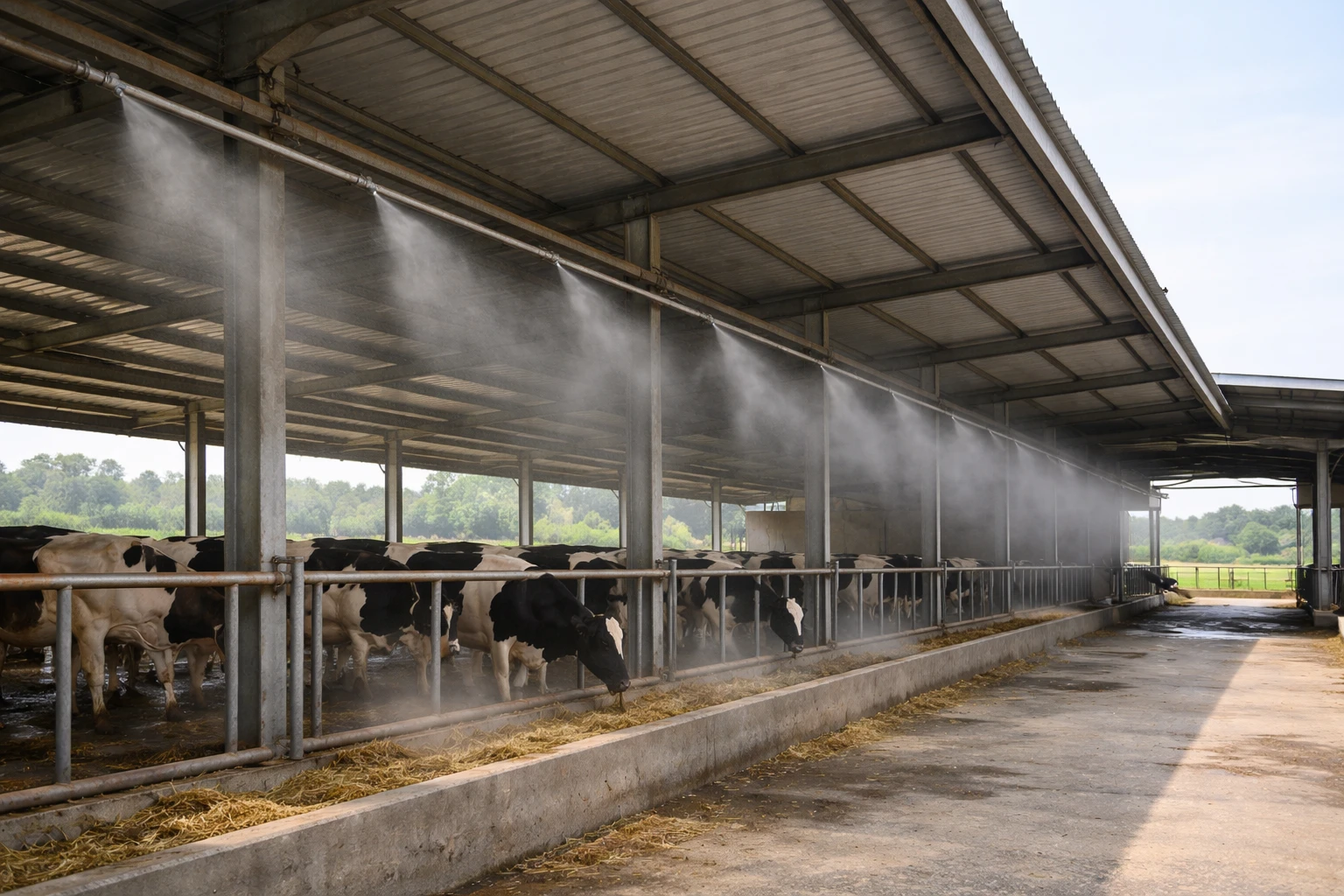
Odor and pathogen pressure in livestock houses often come from humidity, manure decomposition, and ventilation dead zones. We integrate sanitation misting with airflow management to reduce odor spread and improve barn conditions without disrupting daily operation.
High humidity and organic buildup accelerate microbial activity and odor compounds. Effective improvement must address both environmental conditions and airflow.
One-off disinfection or masking is often short-lived and can be irritating. A sustainable, animal-friendly routine works better.
We place treatment points by airflow and density, and control operation by schedule (site-dependent results).
Misting must align with airflow to prevent stagnation or uncontrolled spread.
We plan filtration, nozzle care, and simple on-site routines to keep performance stable.
Livestock climate and odor control varies by barn type, management boundary, aisle use, and odor source. These cards show dairy, pig, and poultry environments separately. Each card has its own looping carousel and expandable image view.
Suitable for barn entrances, aisles, and management boundaries.
Targets heat buildup, odor escape, and boundary control around swine facilities.
Side-spray misting better fits poultry house structure and equipment safety.