
Public Transit
Bus Stop Cooling
Fine mist along the shelter edge improves comfort without directly spraying passengers.
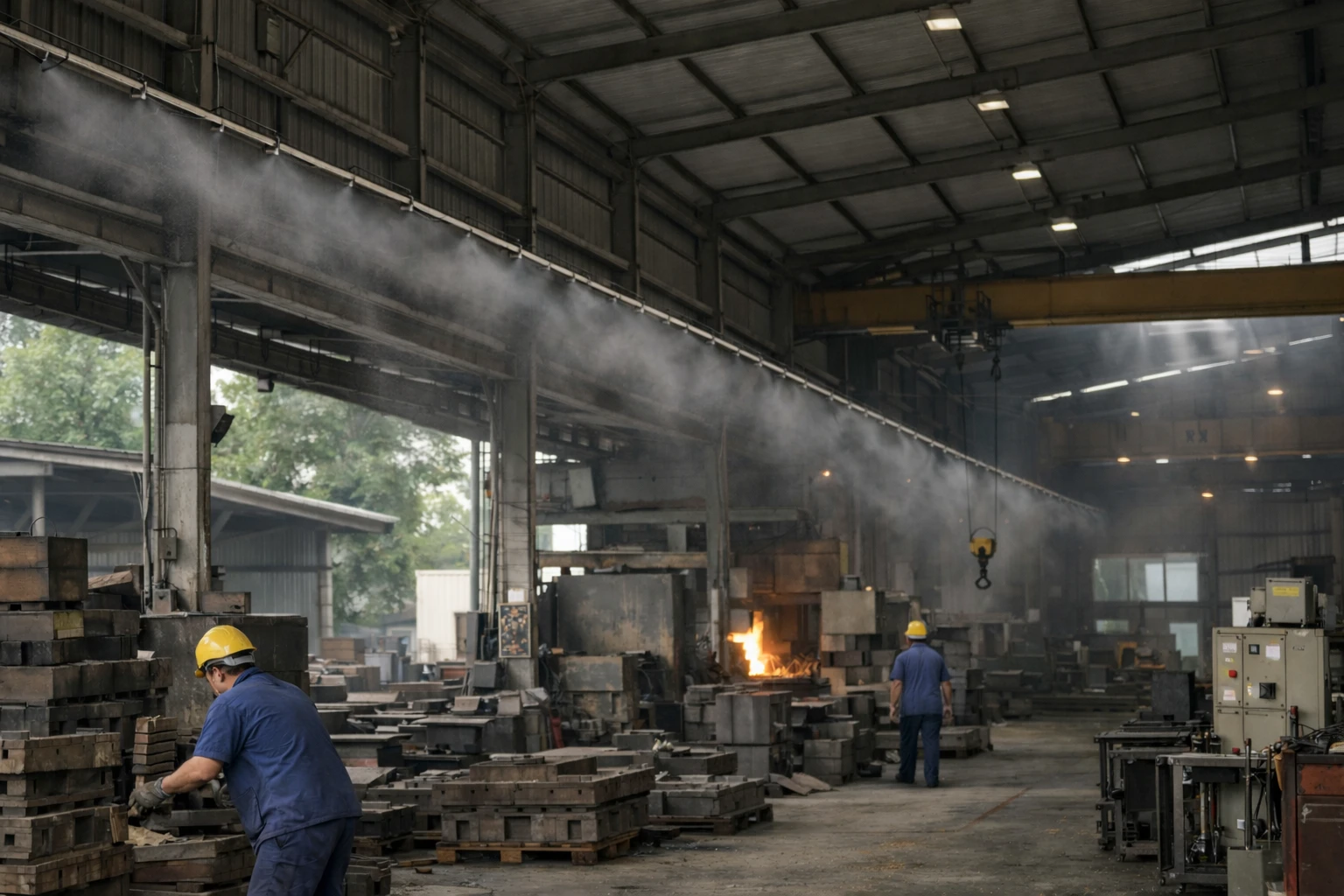
Heat stress is not only about air temperature—heat accumulation, airflow, and radiant load drive perceived discomfort and safety risk. We combine mist cooling with airflow guidance to focus cooling where people work, improving comfort and reducing heat-related incidents.
Industrial heat is often caused by concentrated equipment heat, roof radiation, and poor exhaust paths. Mapping heat sources and airflow helps deliver cooling where it matters.
Perceived heat depends on humidity, air speed, and radiant heat. Same measured temperature can feel very different—design should be centered on work positions.
Misting must work with airflow; otherwise fog lingers and creates damp zones. We guide air and place points strategically.
We start with high-occupancy and long-dwell zones for the fastest safety and comfort ROI.
Long-running cooling needs water management, drainage, anti-slip measures, and predictable maintenance.
Heat mitigation varies by site type. Bus stops, outdoor events, market walkways, hospitality, and sports venues all require different installation logic. Each card below has its own looping carousel and expandable image view.
Fine mist along the shelter edge improves comfort without directly spraying passengers.
Suitable for temporary gatherings, queue zones, and dense visitor flow.
Side-mounted misting is more realistic for narrow market walkways.
Improves comfort around semi-open seating zones.
Mist lines on edges and walkways improve spectator comfort.
Useful for fast deployment in temporary event zones.